Commercial · Oro-Medonte
Commercial-Grade Lock Replacement in Oro-Medonte
The key to the office entrance turns with almost no resistance now, and some mornings the deadbolt does not fully retract until someone jiggles the handle and tries the key again.
Commercial-Grade Lock Replacement
In plain words
A business door rarely fails the same way a house door does, because it opens far more often and often has to satisfy a fire or egress rule a home door never faces. Replacement starts by identifying what the opening actually is: a mortise-prepped steel door, a narrow-stile aluminum storefront, a fire-rated door that needs listed hardware, or an exit serving enough people that code calls for panic-style release. The locksmith fits hardware built for that specific opening, connects it correctly to any electric strike or access-control wiring already present, and hands over keys cut and logged to the business's own system.
How the visit goesThe electric strike buzzes the moment the receptionist presses the release button, but the door still needs a shoulder to get past the latch, as though the two pieces were never matched.
Oro-Medonte
How the visit goes
Reading the door before the lock
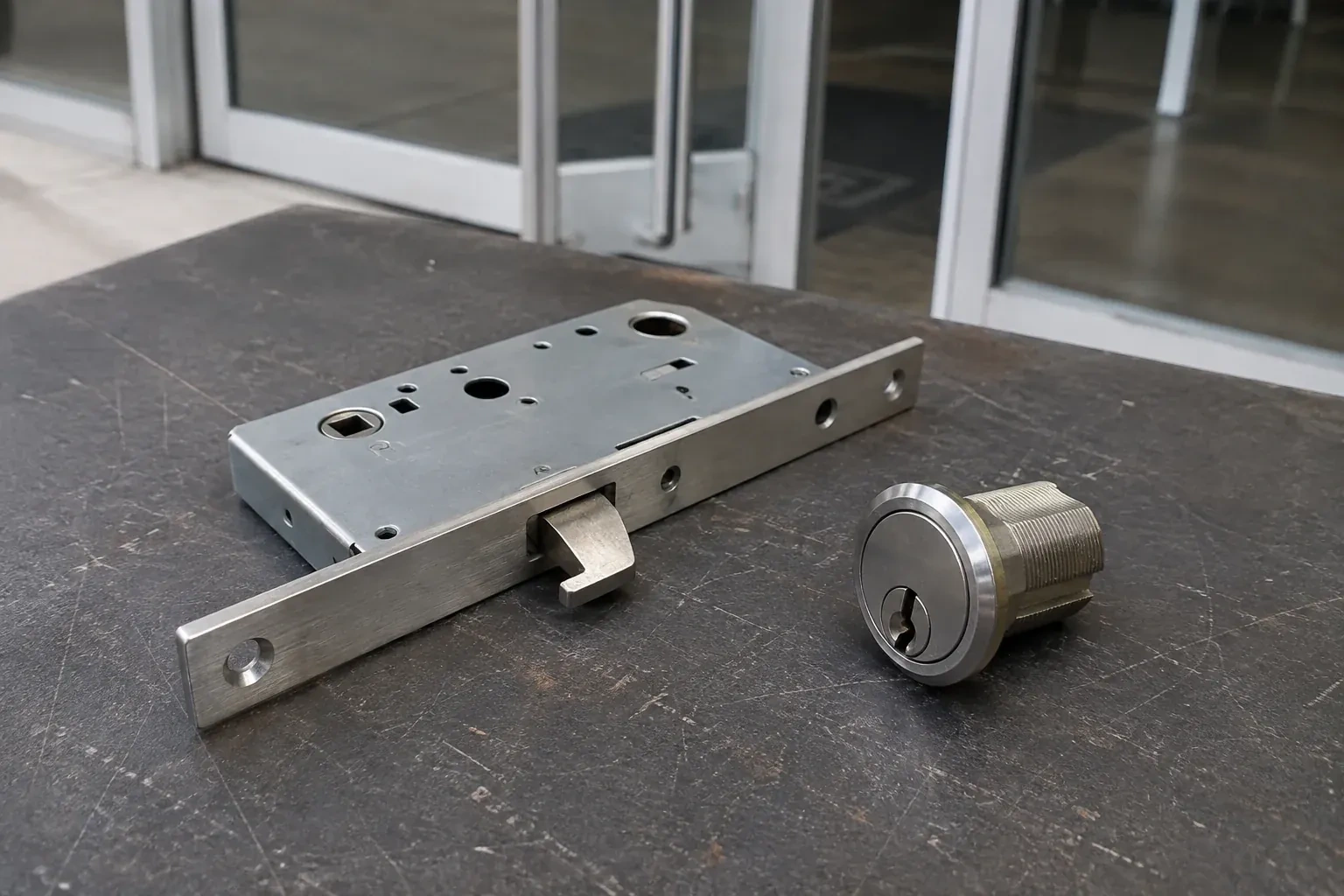
The door tells the locksmith what kind of hardware it can even accept. A hollow-metal or solid wood door with a mortise pocket cut into the edge takes a mortise lock body; an aluminum storefront door with a narrow stile takes a purpose-built narrow-stile lock or hookbolt; a standard cylindrical bore takes a heavy-duty lockset sized to that hole pattern. Handing, swing, backset and existing strike location are measured so the replacement drops into the prep that is already there rather than requiring the door itself to be re-cut.
Fitting the new lock body or lockset
The new hardware is installed into the existing prep, with the lock body or lockset, strike and any reinforcing plate seated so the door closes without binding. On a narrow-stile storefront door, the hookbolt or deadlatch is aligned so it engages the keeper across its full travel rather than catching on one edge. On a mortise-prepped door, the case is fitted so the trim sits flush and the spindle and cylinder line up with the existing holes cut for them.
Fire and exit requirements satisfied, not just noted
Where the door forms part of a fire separation or a required exit route, the new hardware is listed for that use and the door has been tested to confirm it still closes and latches on its own. Any push-type release hardware installed to meet an occupant-load threshold has been checked across the whole route it serves, not just at the one door where the call started. The business leaves with an opening that satisfies the condition that triggered the work, rather than a lock that merely looks similar to what was there before.
Commercial-Grade Lock Replacement
In the van
- Key cutting and coding machine
- Electric strike
- Narrow-stile storefront lock
- Mortise lock body
- Key-control log and tags
What affects the quote
Same fees day, night or weekend
1Panic or exit hardware
Listed exit devices cost more than a standard lockset and are quoted per opening, since a route requiring this hardware often needs it consistently across more than one door along that path.
2Restricted or patented keyways
A restricted keyway usually costs more as hardware than a standard cylinder, and duplicate keys are controlled through the manufacturer or distributor rather than cut freely; some restricted programs require formal registration, while others control the same blanks without a signed authorization step.
3Interchangeable-core hardware
Interchangeable-core cylinders cost more up front than standard ones but reduce the cost of every future rekey, since the business can swap cores itself. Whether that trade-off suits you shapes which cylinder type is quoted.
Commercial-Grade Lock Replacement: questions
Does an electric strike need to match a specific lock function?
Yes. An electric strike has to suit the latch or deadlatch type it will receive, the door's handing and swing, and whether the application needs fail-safe or fail-secure operation, meaning whether the door should unlock or stay locked if power is lost. Choosing a strike without checking these against the mechanical lock is a common reason a door releases electronically but still binds mechanically.
What should I do with the old hardware once it is replaced?
That is entirely your choice. Some businesses keep old hardware briefly in case a spare part is needed elsewhere on the same system, others prefer it removed from the site straightaway, particularly after a break-in where the damaged pieces are no longer wanted around. The locksmith can leave it with you or take it away, whichever you prefer.
How does this service differ from a home lockout or residential rekey?
A home lockout or residential rekey is usually about one door and one household's keys. Commercial-grade lock replacement more often involves a system, several doors, a master key structure, and sometimes a fire or exit rule the door has to satisfy, so the assessment, the hardware selected and the record kept at the end are all built around managing that wider structure rather than a single lock.
Commercial Locks
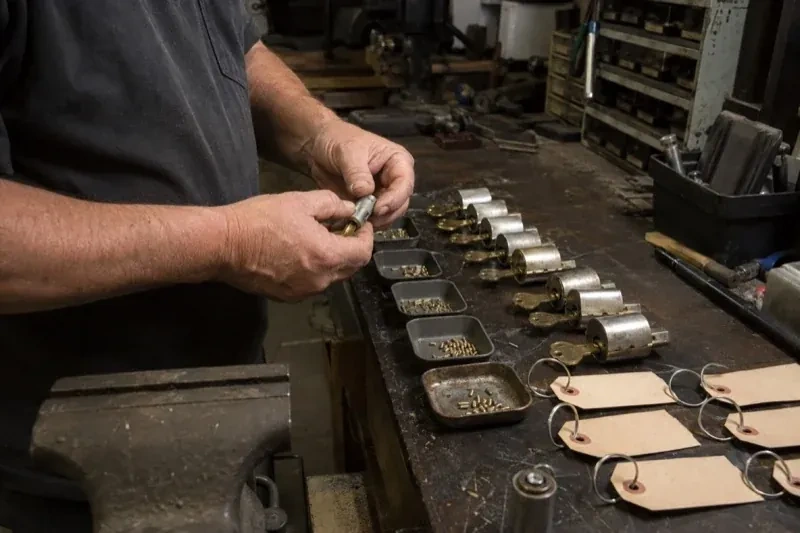
- Master Key System DesignAfter a busy shift the manager counts the keys coming back in and loses track of who still has one.
- Access Control InstallationThe back door of the shop runs on one key, and by now it lives on six different rings: yours, two…
- Panic & Exit HardwareSomeone at the front counter always has to unlock the side door by hand before the lunch rush…
Commercial-Grade Lock Replacement near you
Every lock service we provide in Oro-Medonte starts with the same first step, which is looking at the door properly before deciding anything. The individual pages below explain what that look involves for each job, how the work is carried out, and what to expect from the hardware afterwards.