Change or rekey · Lakeview
Gate & Building Entry Locks in Lakeview
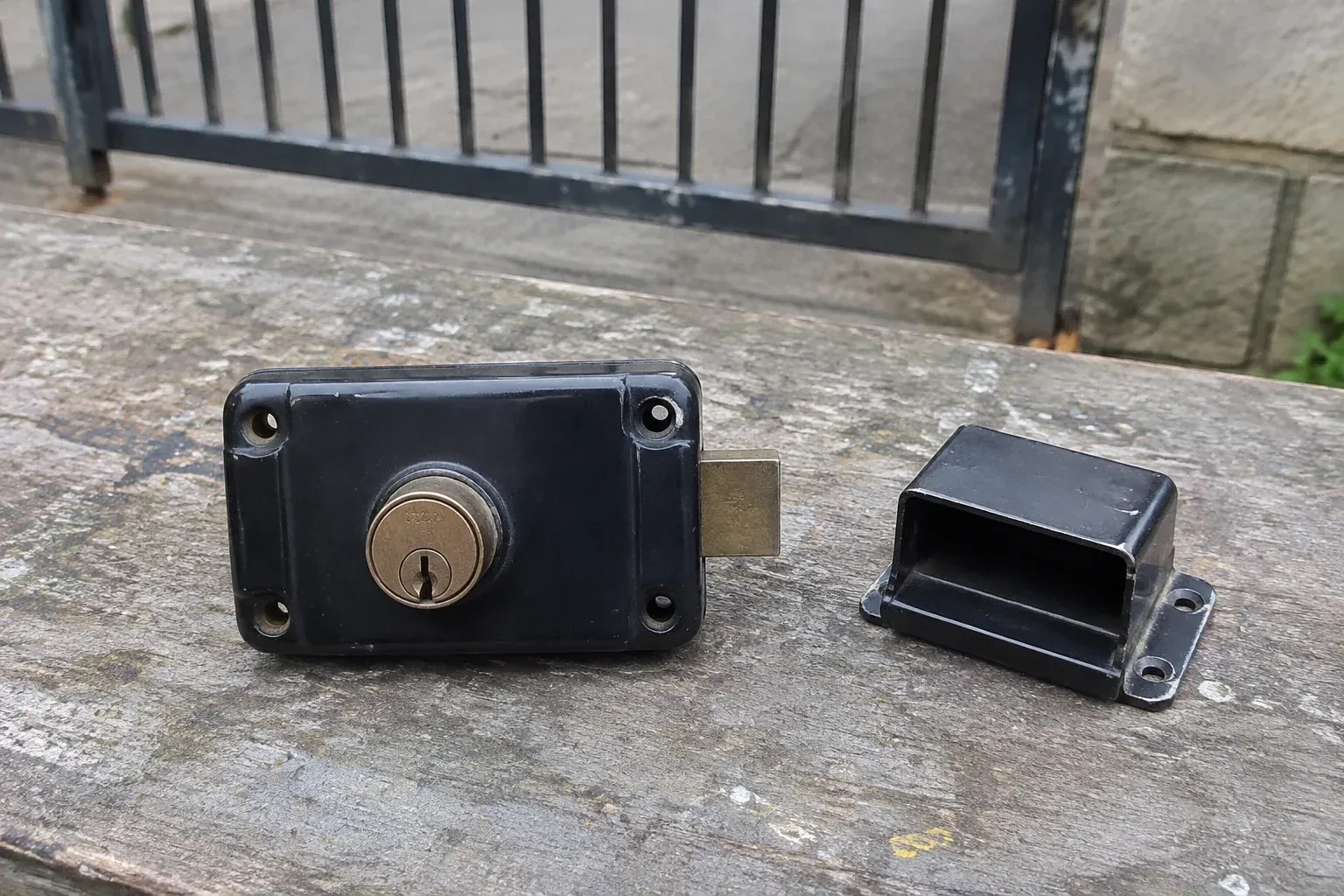
Someone pried at the gate latch overnight, and now the strike plate hangs by one screw and the cylinder spins loose in its housing. The gate still closes, technically, but a firm shoulder is all it would take to open it from outside.
Gate & Building Entry Locks
In plain words
A gate or door that will not latch is rarely just a lock problem; more often the hardware is being asked to catch a moving target. This visit reads the gate or door's actual swing, sag and alignment first, then brings the closer, hinges, strike and cylinder into agreement with each other rather than replacing parts one at a time. Once the physical fit is right, the same lock that seemed unreliable for months often turns out to have been sound all along.
How the visit goesBetween the front gate, the side gate and the one behind the shed, there are three different padlocks, three different keys, and a growing pile of duplicates in a kitchen drawer that nobody can match to the right lock anymore.
Lakeview
How the visit goes
Taking stock of who holds a key
On a shared entry, the lock is only half the picture; the other half is who currently has a working key. The locksmith asks how many units or households rely on this door, whether anyone has moved out without returning a key, and whether other gates or entries on the property are meant to share the same one. That inventory decides whether a straightforward rekey covers everyone or whether some doors need to be brought onto a common key during the same visit, so nobody is left holding a key that no longer opens anything.
Working on the cylinder itself
Depending on what the assessment found, the cylinder is either rekeyed, replaced with a weather-rated unit, or decoded so a fresh key can be cut to match it. Rekeying removes the existing pin combination and sets a new one, so old keys stop working while the same housing stays on the gate. A full replacement suits a housing that is worn, pitted or the wrong grade for outdoor use. Either way, the new or updated cylinder is cycled repeatedly with the new key, from both sides where the hardware has two, before it is considered finished.
A gate that closes itself properly
The visit ends with the gate or door swinging through several full cycles while you watch: opening from a stop, closing on its own, and settling into the latch without a slam or a rebound. Anything adjusted along the way, such as the closer's speed or the strike's position, is pointed out so you know what changed. From here the gate should close the same way whether it is pushed gently or blown by wind, which is the actual point of a working closer rather than a lock that only cooperates when someone remembers to push it shut.
Gate & Building Entry Locks
In the van
- Key blanks and code cutter
- Plug follower and repinning kit
- Dry graphite or PTFE lubricant
- Hinges, pivots and shims
- Cylinder decoder and pick set
What affects the quote
Same fees day, night or weekend
1Number of gates or entries involved
One gate lock is the simplest case. A front gate, a side gate and a shared building entry looked at in the same visit is naturally a longer job with more hardware to work through.
2Access to the gate or entry
A ground-level gate on an easy driveway is straightforward. A shared building entry behind a locked lobby, a gate at the far end of a long property, or awkward scaffolding around the hardware adds time the quote takes into account.
3How many current key holders need new keys
Keys cut on site are counted individually into the quote. A single household needs far fewer than a multi-unit building entry where every current resident is being issued a fresh key at once.
Gate & Building Entry Locks: questions
If the lock gets replaced, can the existing intercom or buzzer stay?
In most cases, yes. The buzzer, keypad and intercom are generally separate from the mechanical lock or cylinder, so replacing the lock itself does not usually mean replacing the electronic side too. Where the two are connected, such as an electric strike wired to the same frame as a new mechanical lock, the locksmith checks the fit and wiring before starting so the electronic system keeps working once the new hardware is in place. Anything that would need to change is explained beforehand.
What actually happens during a gate or building entry lock visit?
The locksmith first watches the gate or door move and checks the hardware fitted to it, then works out whether the issue sits in the lock, the closer, the hinges or the alignment of the frame itself. Whatever combination is found, the relevant piece is adjusted, rekeyed or replaced, and the whole assembly is cycled repeatedly afterward to confirm it closes, latches and locks the same way every time. Any keys involved are cut and tested before the visit is considered complete.
Should I choose a padlock or a built-in gate lock for a new gate?
A padlock through a hasp is simple to fit to almost any gate and easy to rekey or swap later, which suits a gate that gets occasional use or belongs to more than one type of user, such as a shared laneway. A built-in gate lock with its own latch and cylinder tends to suit a gate used daily, since it operates with one motion instead of fitting and removing a separate padlock each time. Either can be paired with a closer if the gate should shut on its own.
Change or Rekey Locks
- Deadbolt InstallationYou bought a keypad deadbolt online and pulled the old one off, only to find the hole in the door…
- Lock Replacement & UpgradeThe century home's original mortise lock takes a key the size of a spoon, sticks in humid weather…
- Vintage Mortise Lock ServiceThe old skeleton key still fits the keyhole, but it now needs a jiggle, a lean on the door and a…
Gate & Building Entry Locks near you
Below, each lock and key service we offer in Lakeview gets its own page, with a description that assumes no prior knowledge. Start anywhere. Many customers arrive for a lockout and leave knowing exactly why the strike plate on the back door has bothered them for years.