Commercial · Oro Lea Beach
Panic & Exit Hardware in Oro Lea Beach
Someone at the front counter always has to unlock the side door by hand before the lunch rush, because the round doorknob out there was never meant to be an exit for a room this size.
Panic & Exit Hardware
In plain words
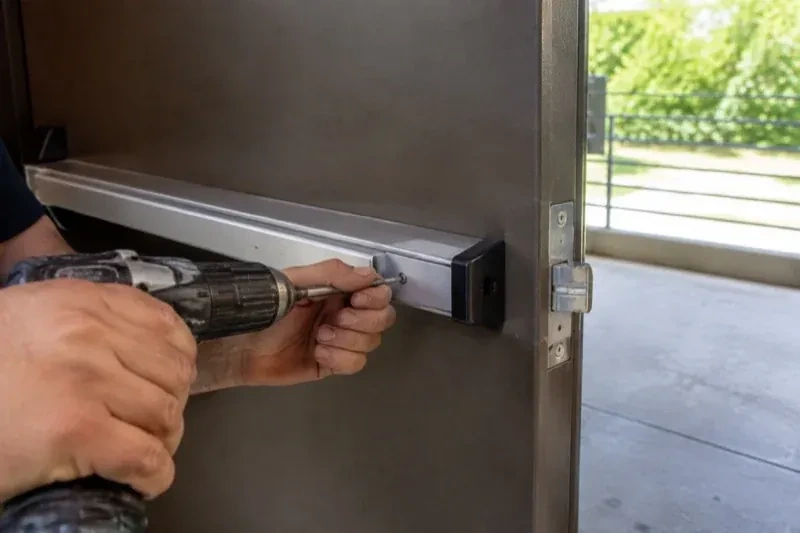
A code trigger usually starts the conversation: an occupant load over a threshold, a fire inspector's note, or a new use for a room that used to hold far fewer people. From there the visit works out which openings are affected, what device and trim suit each one, and whether a pair of doors needs a coordinator or a mullion removed. The installation follows a template, and every device is tested for release force and full latch engagement before the visit ends, with a written record of what went on the door for anyone reviewing the space afterward.
How the visit goesA padlock went on the stockroom's back door years ago for security and nobody has thought about it since, until the walkthrough this week pointed out that the same door is the room's only other way out.
Oro Lea Beach
How the visit goes
Reading the door itself
Every opening gets the same close look: whether it is fire-rated, which way it swings, how wide it is, and what preparation, if any, already exists in the door and frame from earlier hardware. A hollow-metal fire door takes a different device than a wood door in a non-rated partition, and a narrow-stile aluminum storefront door narrows the choice of device further still. Reading this correctly before anything is ordered is what keeps the installation from turning into a second visit once the wrong device arrives and does not fit the preparation already in the door.
Fitting outside trim that still controls entry
The inside of the door stays simple: push to leave, every time. The outside gets whatever lets the right people in, a plain pull for a door nobody needs to unlock from outside, a lever with a key cylinder for staff entry, or a keyed cylinder alone where entry is occasional. Whichever trim is chosen, it operates entirely independently of the inside crossbar, so locking the outside never has any effect on a person's ability to leave from within.
A written record for the next review
The building now has a document naming every device fitted, its rating, the trim and any electrified function, and the tests each assembly passed on installation day. That record is what a fire inspector, an insurance reviewer or a new facilities manager will ask for, and having it ready saves reconstructing the history of a door from memory or from whatever sticker happens to still be on the case. It is worth keeping with the building's other life-safety paperwork.
Panic & Exit Hardware
In the van
- Strike and reinforcement
- Astragal and mullion hardware
- Coordinator for door pairs
- Dogging key or keyed cylinder
- Request-to-exit switch
What affects the quote
Same fees day, night or weekend
1Device family required
A rim device suits many single doors with modest work. A mortise or vertical-rod device, or hardware built to a fire-exit listing, takes more preparation and generally more hardware, which the quote reflects.
2New preparation or existing cut-outs
A door with no prior hardware needs new holes cut and reinforced to the device's template. A door already prepared for a similar device, even an old one, is often a simpler fit with less new drilling.
3Fire-rated versus non-rated opening
A fire-rated door needs hardware specifically listed for that assembly and installed to keep the rating intact, which is more involved than fitting a standard device to a non-rated door.
Panic & Exit Hardware: questions
How is panic hardware different from fire exit hardware?
Panic hardware and fire exit hardware share the same push-to-release action, but fire exit hardware is additionally tested and listed for use on a fire-rated door assembly. That extra listing matters because a fire door has to keep an active latch bolt at all times; it cannot carry a mechanical dogging function the way ordinary panic hardware sometimes can, so the two are not interchangeable on a rated opening.
Can the door be alarmed without making it hard to open?
Yes. An exit alarm module sounds when the device is used, which tells staff a door meant to stay closed has been opened, but it does not add any resistance to the push that releases the latch. The alarm is a notification layer on top of hardware that still opens under one motion, which is why it suits stockroom, dock or perimeter doors where entry through that opening should be rare.
How often does this hardware need to be checked?
Fire door assemblies, including their exit hardware, are inspected and tested on a set schedule, and it is practical to check any exit device on the same rhythm even where the door is not fire-rated. A brief check for a stiff crossbar, a latch that no longer seats fully, or a strike that has drifted is enough to catch most wear before it becomes a callout.
Commercial Locks

- Master Key System DesignAfter a busy shift the manager counts the keys coming back in and loses track of who still has one.
- Access Control InstallationThe back door of the shop runs on one key, and by now it lives on six different rings: yours, two…
- Commercial-Grade Lock ReplacementThe key to the office entrance turns with almost no resistance now, and some mornings the deadbolt…
Panic & Exit Hardware near you
Homes in Oro Lea Beach bring us sticking deadbolts, lost keys, moves and upgrades. Businesses bring storefront doors, back doors, key control and safes. The services below cover both sides in detail, so whichever kind of door you are standing in front of, the right page is a click away.